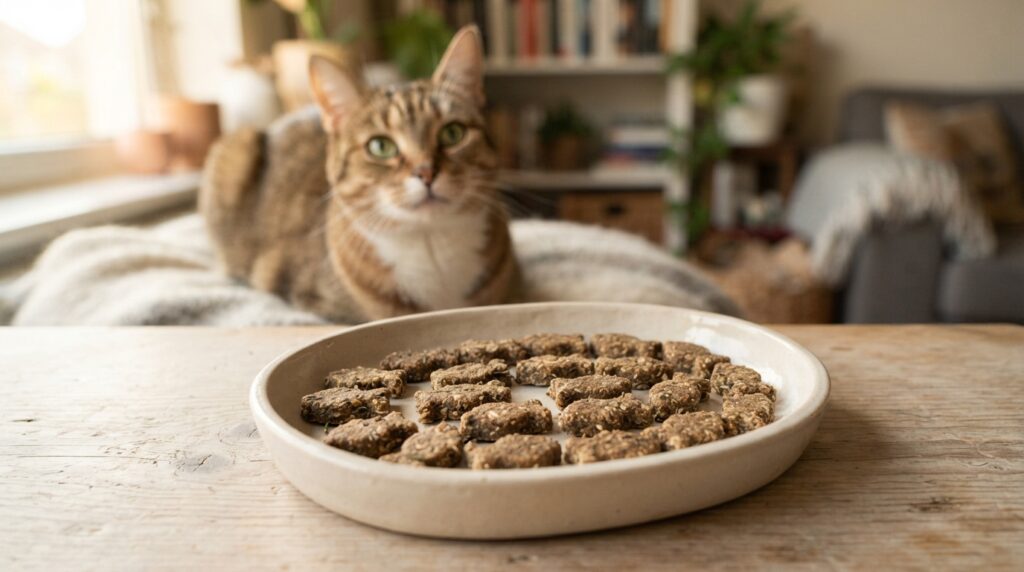

Cats can be selective about food, routines, and anything introduced into their environment. A new treat may be accepted immediately by one cat and ignored completely by another. That makes ingredient awareness especially useful when considering specialty pet products.
Holistapet CBD Cat Treats are typically formulated as bite-sized snacks containing cannabidiol, a compound derived from cannabis or hemp. Before adding them to a cat’s routine, owners should understand what CBD is, how these products are made, what research says about feline use, and which safety questions remain unanswered.
Understanding CBD in Cat Treats
CBD, or cannabidiol, is one of the naturally occurring compounds found in cannabis plants. Unlike THC, CBD is not considered intoxicating in the same way. However, the absence of an intoxicating effect does not automatically mean that a CBD product is appropriate or risk-free for cats.
Research into CBD and companion animals remains limited, particularly for cats. The U.S. Food and Drug Administration has stated that it has not approved cannabis for use in animals and cannot assure the safety or effectiveness of cannabis products marketed for pets. The agency recommends discussing appropriate treatment options with a veterinarian.
The distinction between a general treat and a product marketed for a therapeutic purpose also matters. Claims that a product can diagnose, treat, cure, or prevent a disease can place it into a different regulatory category. Pet owners should therefore pay close attention to product labeling rather than relying on broad wellness claims.
What CBD Does and Does Not Mean
The word “CBD” describes a specific compound, not a guarantee about a product’s quality. Two treats can contain CBD but differ considerably in concentration, ingredients, manufacturing methods, and testing.
A responsible evaluation starts with the entire product rather than the CBD number alone. Factors such as the cat’s age, weight, diet, medications, and existing health needs can also affect whether a particular product deserves consideration.
Some commonly misunderstood points include:
- CBD is different from THC, although hemp-derived products can still require careful ingredient review.
- A larger amount of CBD does not automatically provide a better result.
- A product labeled for pets is not necessarily FDA-approved.
- Human CBD products should not automatically be substituted for feline products.
- Product claims should be evaluated separately from established scientific evidence.
The FDA has also raised concerns about CBD product quality, including situations in which tested products did not contain the amount of CBD stated on their labels or contained contaminants.
Choosing a Better-Documented Product
When evaluating a CBD treat for a cat, the ingredient panel deserves as much attention as the front label. A simple product with clearly identified ingredients is easier to assess than a treat containing numerous proprietary blends or vague descriptions.
A useful starting checklist includes:
- Full ingredient list
- Clearly stated CBD amount
- Suggested serving information
- Manufacturer identification
- Batch or lot information
- Testing documentation when available
- Storage instructions
- Warnings and precautions
- Clear distinction between CBD and THC content
Third-party laboratory testing can provide additional information about cannabinoid content and contaminants. A certificate of analysis, when genuine and applicable to the specific batch, may help verify whether the product matches its label.
Why Testing Matters
CBD products can vary in chemical composition. The FDA has reported concerns involving inaccurate CBD concentrations and potential contaminants such as pesticides, heavy metals, and THC.
For cats, this issue is particularly relevant because their small body size can make ingredient amounts more significant. A treat containing several active compounds should therefore be evaluated with the same care given to other concentrated pet products.
The absence of a laboratory report does not prove that a product is unsafe. It does mean that the buyer has less independent information available when assessing consistency and purity.
Another useful practice is checking whether the product was specifically formulated for cats. Cats have different nutritional and metabolic characteristics from dogs, so a canine product should not automatically be treated as interchangeable with a feline product.
Introducing a New Treat Carefully
Cats often respond better to gradual changes than sudden alterations to their routine. A new treat can be introduced separately from other dietary changes so that any unusual reaction is easier to identify.
Before introducing a CBD-containing product, veterinary guidance is especially appropriate for cats that take medication or have ongoing health concerns. The FDA has identified potential drug interactions with CBD and has emphasized that important safety questions remain unanswered.
A cautious approach can include these steps:
- Review the complete ingredient label.
- Confirm that the product is intended for cats.
- Check the amount of CBD per treat rather than relying on the package’s total CBD figure.
- Discuss the product with a veterinarian, particularly when medication is involved.
- Follow the product’s stated directions rather than estimating an amount.
- Introduce only one new product at a time.
- Observe the cat for changes in appetite, digestion, alertness, or behavior.
- Stop use and seek veterinary advice if concerning symptoms appear.
This process helps separate ordinary food preferences from potential reactions. It also prevents several new treats or supplements from being introduced simultaneously, which can make it difficult to identify the source of a problem.
Safety Questions Cat Owners Should Consider
CBD research in animals has developed more slowly than consumer interest. The FDA has specifically identified the safety of CBD in pets and other animals as an area requiring further study.
That research gap matters when evaluating statements about everyday feline wellness. A product may be widely available without having the same level of clinical evidence associated with an FDA-approved veterinary medication.
The FDA has reported possible adverse effects associated with cannabis exposure in pets, including lethargy, depression, heavy drooling, vomiting, agitation, tremors, and convulsions. Any cat showing these signs after ingesting a cannabis-containing product should receive prompt veterinary attention.
Situations Requiring Extra Caution
Certain cats deserve more careful consideration before receiving any new supplement or specialty treat.
These include cats that:
- Take prescription medications
- Have diagnosed liver or kidney problems
- Are elderly or medically fragile
- Are pregnant or nursing
- Have experienced previous reactions to supplements
- Have difficulty maintaining a normal appetite
- Are already receiving several supplements
The concern is not limited to CBD itself. Other ingredients in a treat can also affect a cat’s tolerance. Flavorings, oils, herbs, sweeteners, preservatives, and concentrated botanical ingredients should all be reviewed.
Veterinary advice can also help determine whether a reported concern actually calls for a supplement. A change in appetite, mobility, sleep, grooming, or behavior may sometimes signal an underlying health issue that requires diagnosis rather than dietary experimentation.
Reading Wellness Claims More Carefully
Pet-product labels can use language that sounds medical even when the supporting evidence is limited. Terms such as “calming,” “comfort,” “mobility,” and “wellness” may describe intended positioning rather than proven treatment effects.
The distinction is important. FDA enforcement actions have addressed CBD animal products marketed with claims about treating or preventing medical conditions. In 2025, the FDA issued a warning letter involving products marketed as CBD cat treats and other animal products, stating that CBD is not approved for use in animal food and raising safety concerns identified in the scientific literature.
For consumers, this means product descriptions should be read critically. A statement printed on packaging is not equivalent to evidence from controlled veterinary research.
A sensible evaluation asks three questions:
- What does the product actually contain?
- What evidence supports the stated benefit?
- Is there a safer or better-established option for the cat’s specific need?
Those questions keep the focus on the animal rather than the marketing language.
Building a Sensible Treat Routine
Treats should remain part of the cat’s overall diet rather than replacing balanced nutrition. Portion size matters because repeated snacks can add calories quickly, particularly for indoor cats with relatively low daily activity.
A practical routine can include measured meals, fresh water, appropriate play, environmental enrichment, and treats used in moderation. If a CBD-containing treat is being considered, it should fit into that broader routine rather than become the sole focus of feline wellness.
Cats also benefit from predictable daily habits. Consistent feeding times, clean litter areas, comfortable resting spaces, scratching opportunities, and interactive play can support normal behavior without introducing additional substances.
This broader perspective is useful because feline wellness involves several interconnected factors. Diet alone cannot substitute for veterinary care, exercise, environmental enrichment, or treatment of an underlying illness.
Final Thoughts
CBD-containing cat treats require careful evaluation because feline research and regulatory approval remain limited. Reviewing ingredients, checking product documentation, and consulting a veterinarian can help owners make more informed decisions about whether such products belong in a cat’s routine.