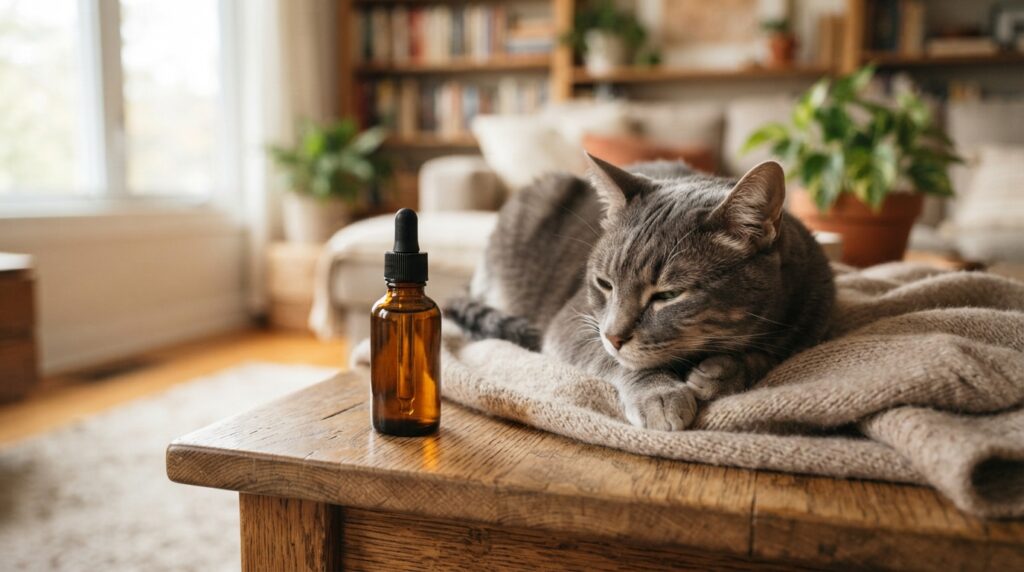

Cats can react differently to supplements, foods, and changes in their daily routine. Any product added to a cat’s diet deserves careful consideration, especially when the available evidence is limited or still developing. Holistapet CBD Oil for Cats has received attention from pet owners because cannabidiol, commonly called CBD, is a compound derived from cannabis plants that does not produce the intoxicating effects associated with THC.
Before choosing a CBD product, cat owners need to understand what the product contains, how it is labeled, and whether there is enough reliable information to support its intended use. Product quality also matters because oils can vary considerably in concentration, ingredients, and testing practices.
Understanding CBD and Cats
CBD is one of many cannabinoids found in cannabis plants. Unlike tetrahydrocannabinol (THC), CBD is not considered intoxicating. The endocannabinoid system exists in mammals and is involved in several physiological processes, but the presence of this system does not automatically establish that CBD is safe or effective for treating a particular condition in cats.
Research involving companion animals remains limited compared with research involving humans. The U.S. Food and Drug Administration has stated that it has not approved cannabis for use in animals and has not approved cannabis-derived products for use in animals as drugs. This distinction matters because products marketed for pets may not have undergone the same type of evaluation required for an approved veterinary medication.
Why the Label Matters
A bottle can look professional and still leave important questions unanswered. A useful label should make it possible to determine how much CBD is present and what other ingredients are included.
Check for:
- The total amount of CBD in the container.
- The amount of CBD per serving or measured dose.
- A complete ingredient list.
- A batch or lot number.
- Manufacturer contact information.
- Storage instructions.
- A clear statement about the product’s intended use.
- Laboratory testing information when available.
The concentration should be expressed clearly. For example, knowing that a bottle contains 600 milligrams of oil is less useful if the label does not explain how much CBD is present per milliliter.
How to Evaluate Product Quality
Quality assessment begins before the bottle is opened. A responsible purchasing decision involves examining the source of the CBD, the carrier oil, laboratory documentation, and the manufacturer’s labeling practices.
A certificate of analysis, often called a COA, can provide useful information when it comes from an independent laboratory. The document should identify the tested product or batch and show cannabinoid results. Depending on the laboratory and product, testing may also cover contaminants such as pesticides, heavy metals, solvents, or microbial contamination.
Look Beyond the Front Label
Marketing language can make a product sound more precise than it actually is. Terms such as “natural,” “premium,” or “full spectrum” do not by themselves prove safety, purity, or effectiveness.
A closer review should answer several basic questions:
- What exactly is in the bottle?
- How much CBD does the product contain?
- Does the laboratory report correspond to the same product or batch?
- Is THC reported separately?
- Are additional ingredients suitable for cats?
- Is the recommended serving easy to measure accurately?
Cats also have different nutritional and metabolic needs from humans. An oil designed primarily for people may contain flavorings, sweeteners, essential oils, or other ingredients that are unsuitable for feline use.
Safety Considerations Before Use
CBD should not be treated as a substitute for veterinary diagnosis. A cat that suddenly stops eating, hides more than usual, vomits repeatedly, develops breathing difficulties, or shows a major change in behavior may have an underlying medical problem that requires professional attention.
The Cornell Feline Health Center notes that changes in appetite can be associated with many feline health problems. Cats can also become seriously ill when they go without food for an extended period. A supplement should never delay an examination when symptoms are persistent or severe.
Possible Adverse Effects
Research on CBD in cats is still developing, so the complete range of long-term effects is not established. Studies have reported possible adverse effects, and CBD may affect the activity of certain enzymes involved in drug metabolism.
Potential concerns can include:
- Sleepiness or changes in activity.
- Gastrointestinal upset.
- Changes in appetite.
- Alterations in liver-related laboratory values.
- Possible interactions with other medications.
A veterinary professional can assess whether a cat’s current medications, age, health history, and symptoms create additional concerns.
What Research Says About Feline CBD
Scientific evidence should be separated from marketing claims. A 2019 study published in Animals investigated the pharmacokinetics, safety, and tolerability of orally administered CBD in healthy cats. The researchers found that CBD was measurable in the cats after administration, while some animals experienced adverse effects such as excessive licking and head shaking.
A later study published in Frontiers in Veterinary Science examined the safety and pharmacokinetics of a broad-spectrum hemp extract in cats. Research of this type helps establish how cats process cannabinoids, but pharmacokinetic evidence does not automatically demonstrate that a product treats a specific illness.
This distinction is easy to miss online. A study can show that a compound reaches the bloodstream without proving that it improves anxiety, pain, arthritis, cancer, or another condition.
Why Evidence Quality Matters
Evidence can range from laboratory research to controlled clinical trials and anecdotal reports. These sources do not carry the same weight.
A practical hierarchy looks like this:
| Evidence type | What it can tell readers |
|---|---|
| Laboratory research | How a compound behaves under controlled conditions |
| Animal safety studies | Possible effects and tolerability |
| Controlled clinical studies | Whether a treatment may help a defined condition |
| Case reports | Details about individual animals |
| Customer reviews | Personal experiences, not controlled evidence |
Customer testimonials can be interesting, but they cannot establish whether CBD caused an improvement. Cats may also experience natural fluctuations in symptoms, changes in diet, concurrent treatments, or differences in their underlying condition.
Choosing a Product Carefully
A cautious approach starts with the cat rather than the bottle. Age, weight, existing health problems, medications, diet, and the reason for considering CBD all affect whether supplementation deserves further discussion with a veterinarian.
Avoid products with unclear cannabinoid concentrations or incomplete ingredient information. A low-quality product can create uncertainty about what the cat actually receives.
Practical Purchasing Checklist
Before buying a CBD oil for a cat, review the following:
- Confirm that the cannabinoid concentration is clearly stated.
- Read every ingredient rather than relying on the product name.
- Look for batch-specific laboratory testing.
- Check whether the laboratory report identifies cannabinoid concentrations.
- Avoid products containing ingredients known to be unsuitable for cats.
- Keep the product in its original container.
- Store it according to the label instructions.
- Keep the bottle away from children and animals that could accidentally consume it.
A dropper can also create measurement problems. If a label gives a concentration per milliliter, the amount delivered by a single drop may vary depending on the dropper design and the size of the drop. Measurements should therefore follow the product’s specific instructions rather than assumptions based on another brand.
Discussing CBD With a Veterinarian
Veterinary guidance is especially useful when a cat already receives prescription medication. CBD can potentially influence drug metabolism, so adding it without reviewing the existing medication list may create avoidable risks.
A veterinarian may also determine that a different approach is more appropriate. For example, a cat showing signs of discomfort may need an examination, dental evaluation, bloodwork, imaging, pain management, dietary adjustment, or another evidence-based treatment.
Questions Worth Asking
A focused veterinary conversation can include:
- What could be causing the cat’s current symptoms?
- Are there medications or supplements that could interact with CBD?
- Is the cat’s age or health history a concern?
- What signs should be monitored after introducing a new product?
- What information should be recorded if the product is used?
- When should the product be stopped?
Keeping a simple record of appetite, water consumption, litter box habits, activity, and unusual behavior can help identify changes. Such records can also give a veterinarian more useful information than a general statement that a cat “seems different.”
Understanding the Pet CBD Market
The broader CBD market has expanded rapidly, but market growth does not establish medical effectiveness. Market reports often combine human and animal products or use different definitions for market size, which makes individual figures difficult to compare.
The U.S. pet supplement market also includes many categories beyond CBD, such as vitamins, probiotics, joint supplements, and nutritional products. This wider market provides context for consumer interest in pet wellness products, but it should not be interpreted as evidence that every supplement category has equal scientific support.
Regulatory status is another important consideration. The FDA has repeatedly explained that it has concerns about the safety and legal status of unapproved cannabis-derived products marketed for animals. Consumers should therefore distinguish between a product being commercially available and a product being approved as a veterinary medicine.
Final Thoughts
Selecting a CBD product for a cat requires attention to ingredients, concentration, laboratory testing, and veterinary guidance. Because feline research remains limited, careful product evaluation and professional advice are more reliable than relying on marketing claims or customer testimonials.